
Pharo Smalltalk is like English
Published on Feb 04, 2024 11:15 by KE Programmer
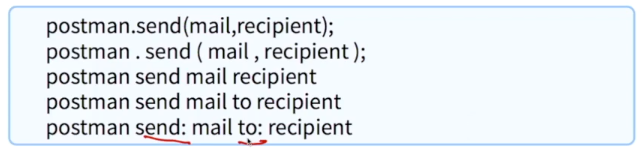
Figure 1: Image showing progression from java to pharo syntax
I'm currently on week 2 of the pharo mooc, and it's fun and eye opening so far.
Smalltalk the language was designed by Alan Kay to be easy enough for a child to use for his dynabook project, and that is why it has such a small syntax.
In the mooc, an example I see of this is when it comes to your typical method call in C-like languages.
Let's say we have a postman object that we use to send mail to a recipient. It can be represented in Python as:
postman.send(mail, recipient);
In smalltalk in the place of calling an object's methods, we think in
terms of sending messages to objects. In the example above, we would
be sending the message send to the postman object with parameters
mail and recipient.
To gradually convert the method call above to its pharo equivalent, we would do the following:
Separate the words from the structure
postman . send ( mail , recipient );Remove the structural tokens, leaving only the words
postman send mail recipientMake it more English-like
postman send mail to recipientConvert to pharo's message sending syntax
postman send: mail to: recipient
In this example, we're sending a keyword message send:to: to the
postman object.
In pharo there are 3 different types of messages:
Unary messages that have no arguments. For example, to square an integer, we send the
squaredmessage to it.5 squared > 25
Binary messages that take a single argument. Common arithmetic is implemented like this. In the example below, we add 1 and 2 by sending the binary message
+to the object1with the argument2.1 + 2 > 3
One or more keyword messages that are followed by a colon. For example, below we check the whether 2 is between 1 and 3 by sending the keyword messages
between:and:to integer object 2 with arguments 1 and 3.2 between: 1 and: 3 > true